
Lessons from FTX Collapse
Introduction to FTX

FTX was founded by Sam Bankman-Fried, the son of two compliance law professors. At its peak, it was one of the largest crypto exchanges in the world, the third largest after Binance. Sam was also famously heralded by Nas Daily, a social media channel, as "the most generous billionaire in the world".
But somehow, in November 2022, it all came crashing down. FTX was insolvent, and there were accusations of fraud and ponzi schemes. FTX's sister company, Alameda Research, was also accused of shady practices. By mid-November 2022, Sam would be tweeting out apologies on Twitter, while pointing fingers to certain parties. But the FTX collapse seemed to be the culmination of a series of events, which began to unravel earlier in 2022 when Sam (or, FTX) tried to rescue a bunch of troubled crypto companies, such as Voyager.
So, what happened?
(This article is still being researched and written, please come back soon for updates.)
Background - FTX's Rise and Fall
Here, briefly, is how the FTX story unfolded.
Sam Bankman Fried started Alameda Research, a crypto trading company. Somehow, he discovered a pricing difference of Bitcoin in various markets and quickly made a lot money through arbitraging the price differences. Soon, he became ambitious and eventually, started a crypto exchange called FTX.
Sam, FTX's founder, was portrayed as a young idealist, who wanted to support effective altruism. He was quoted as saying that he wanted to give all his wealth away to causes like fighting climate change.
FTX raised funds, from a number of investors, including Softbank, Sequoia, and Binance. FTX was a successful exchange, and eventually grew to a size that rivalled Binance's position as one of the leading crypto exchanges.
Binance decided to exit its investment in FTX, and FTX agreed to buy back Binance's shares. FTX paid for Binance's shares in FTT tokens.
Fast forward to early November 2022, a CoinDesk report emerged that showed that SBF's empire, which consisted of the FTX exchange, and Alameda Research, his trading company, had a large portion of its balance sheet in FTT tokens, i.e. the FTX exchange tokens.
To quote the CoinDesk article: "That balance sheet is full of FTX – specifically, the FTT token issued by the exchange that grants holders a discount on trading fees on its marketplace. While there is nothing per se untoward or wrong about that, it shows Bankman-Fried’s trading giant Alameda rests on a foundation largely made up of a coin that a sister company invented, not an independent asset like a fiat currency or another crypto."
And it turned out that Binance had a lot of FTT tokens, about $2 billion worth of it.
CZ, the CEO of Binance, made an announcement that they would sell their FTT token holdings.
This caused FTX's customers to get worried.
Alameda Research's CEO, Caroline Ellison, came out to offer to buy all of CZ's FTT tokens at $22 a piece, but CZ refused. The selling continued.
As the FTT token was being sold, there was pressure on the price action, triggering FTX's customers to withdraw their assets from FTX. A bank run was triggered.
Eventually, FTX was forced to disclose that they were indeed, insolvent. It was a stunning fall for the billionaire Sam Bankman Fried, whose parents were compliance law professors.
As part of Binance’s exit from FTX equity last year, Binance received roughly $2.1 billion USD equivalent in cash (BUSD and FTT). Due to recent revelations that have came to light, we have decided to liquidate any remaining FTT on our books. 1/4
— CZ 🔶 Binance (@cz_binance) November 6, 2022
(Above: The tweet from CZ which triggered the situation.)
At some point during the unravelling of the situation, after the FTT token had been badly hit, CZ came out with a statement that Binance had signed a non-binding LOI to potentially buy FTX.
But the very next day, Binance announced that FTX's problems were too big for Binance to resolve.
Naturally, that made things go from bad to worse.
FTX insisted that only its Bahamas operations were affected; and that its US operations were unaffected.
FTX under Chapter 11 Bankruptcy Proceedings
FTX has since filed for Chapter 11 Bankruptcy protection.
Under Chapter 11 rules, it needs to appoint a new CEO.
This has already happened. John Ray III has been appointed as the new CEO of FTX. He was the same person appointed in the fallout of Enron.
In his court affidavit, John Ray III said, "Never in my career have I seen such a complete failure of corporate controls and such a complete absence of trustworthy financial information as occurred here."
The court filings make it clear that the new CEO of FTX is appalled with the management and operations of FTX.
Some of those failings included:
- Alameda Research loaning out $1 billion in funds to SBF;
- Imprecise accounting
- FTX failing to include customer liabilities in its financial statements
- Failure to build a list of customers' bank accounts and account signatories
- Using company funds to buy properties in the Bahamas
- Lack of using books and records or security controls for its digital assets
- Using an unsecured group email as the root user to access confidential private keys.
The bankruptcy proceedings are still ongoing, and we will see the full extent of it over time.
Meanwhile, here are ...
Some Lessons from the FTX Collapse
There are ample news outlets covering the FTX incident, and it will continue for a few more months. However, here are some lessons from the FTX collapse, from the legal perspective.
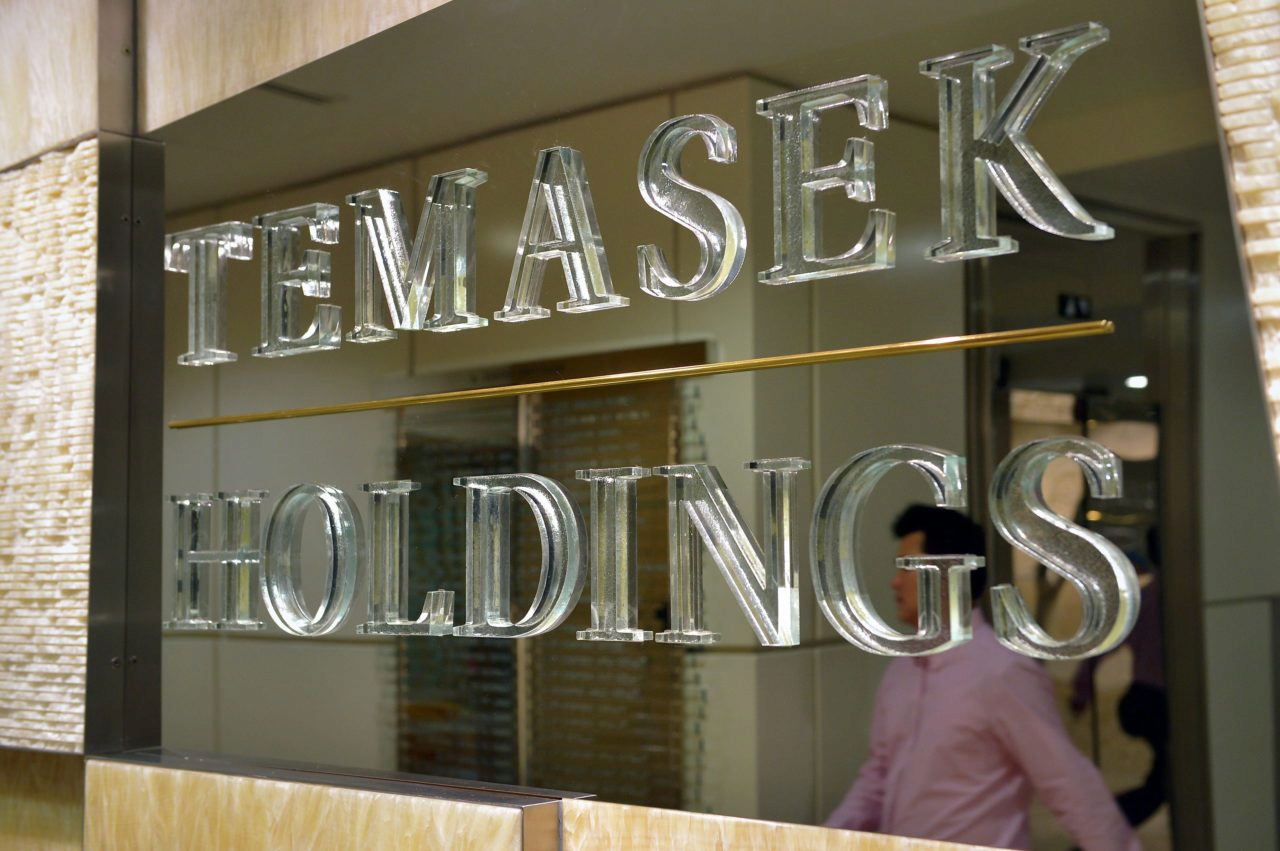
First, due diligence as an investor is important. FTX's investors who poured in millions of dollars into the company are now being questioned. If a fund had invested a sizeable fortune into the company, which then collapsed, the investment fund's stakeholders would ask how they decided to make such an investment. If the due diligence was found to be carried out negligently, If not, the fund managers might lose their jobs. One prominent investor was Temasek, the sovereign fund of Singapore, which wrote off its $275 million investment in FTX, saying only that its faith in SBF was "misplaced".
The second lesson is that there needs to be stringent corporate controls and a real separation of entities. The evidence showed that Alameda Research was taking advantage of insider information, of upcoming token launches on FTX, by buying up large amounts of the tokens. There was also the question of the loans given by FTX to Alameda Research using the FTT token as collateral. Alameda was using customer funds for trading. This happened despite FTX promising customers in their terms of service that customer's funds would not be touched.
This practice of loaning out funds from customers' deposits is called "rehypothecation" and is common among banks. However, banks are different because they may be protected by deposit insurance, which is often instituted by government initiative. In the US, the FDIC (Federal Deposit Insurance Corporation) plays that role, ensuring that customers' deposits are safe in the event of a bank run. This type of deposit insurance was instituted after bank runs caused the collapse of banks during the Depression era.
This leads us to the third lesson. FTX.US, the US arm of FTX, misled customers about being under FDIC protection. It gave the impression that funds in its accounts would be protected in the event it collapsed, and that it was safe for customers to leave their funds on the exchange. The FDIC said in its press release, "Based upon evidence collected by the FDIC, each of these companies made false representations —including on their websites and social media accounts — stating or suggesting that certain crypto-related products are FDIC-insured or that stocks held in brokerage accounts are FDIC-insured."
Fourth lesson, regulators cannot regulate what is not within their jurisdiction. And in the case of FTX, it had a Bahamas entity, as well as a US-based entity. The Bahamas entity is subject to the Bahamian regulator's oversight, and the US entity is subject to the US regulators' oversight. What if the Bahamian government refused to take action against FTX, perhaps out of a deal that gives clemency to SBF and his partners? There would be nothing much that other regulators could do due to the international law principle of territoriality. Recently, news has emerged that the Bahamian regulators ordered the Bahamian entity of FTX to transfer all its crypto to its safekeeping. Would those funds be transferred over to the US regulators? Probably not, but we'll see. The US government has trade embargo and other measures that it can use to its leverage if needed.
That's it for now, but we are still researching this issue. We are also collecting audio responses for a podcast on the matter. See below.
We are seeking your audio response on the FTX situation
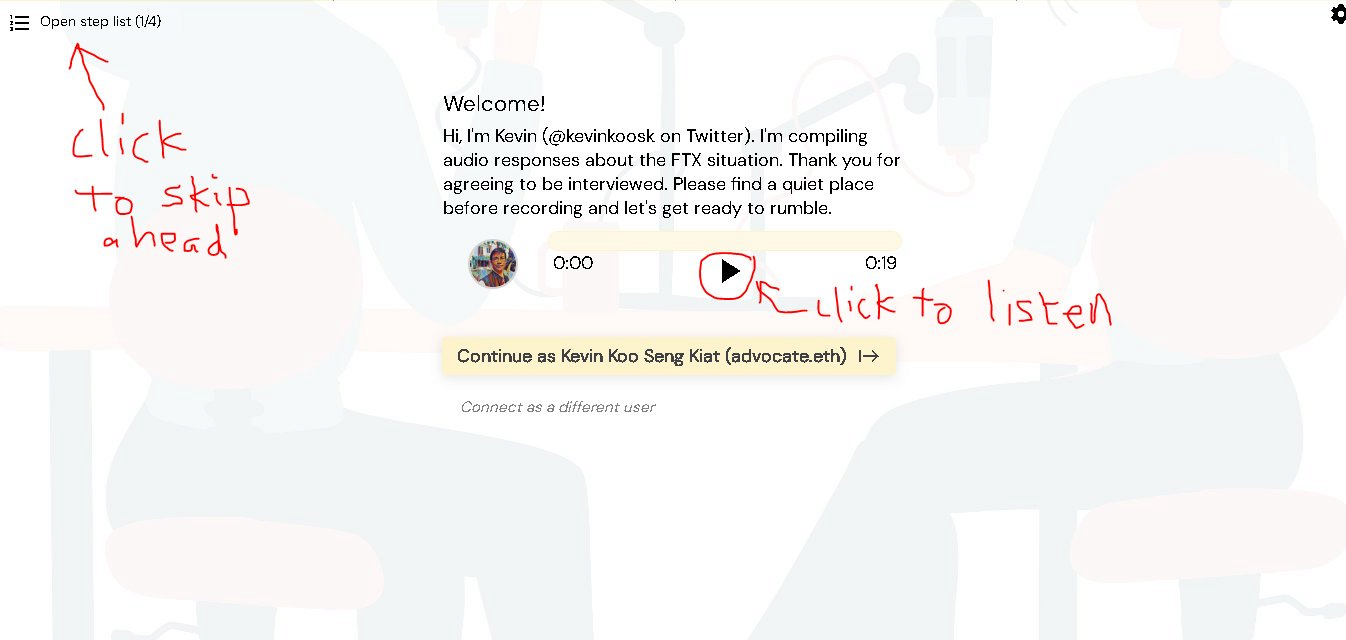
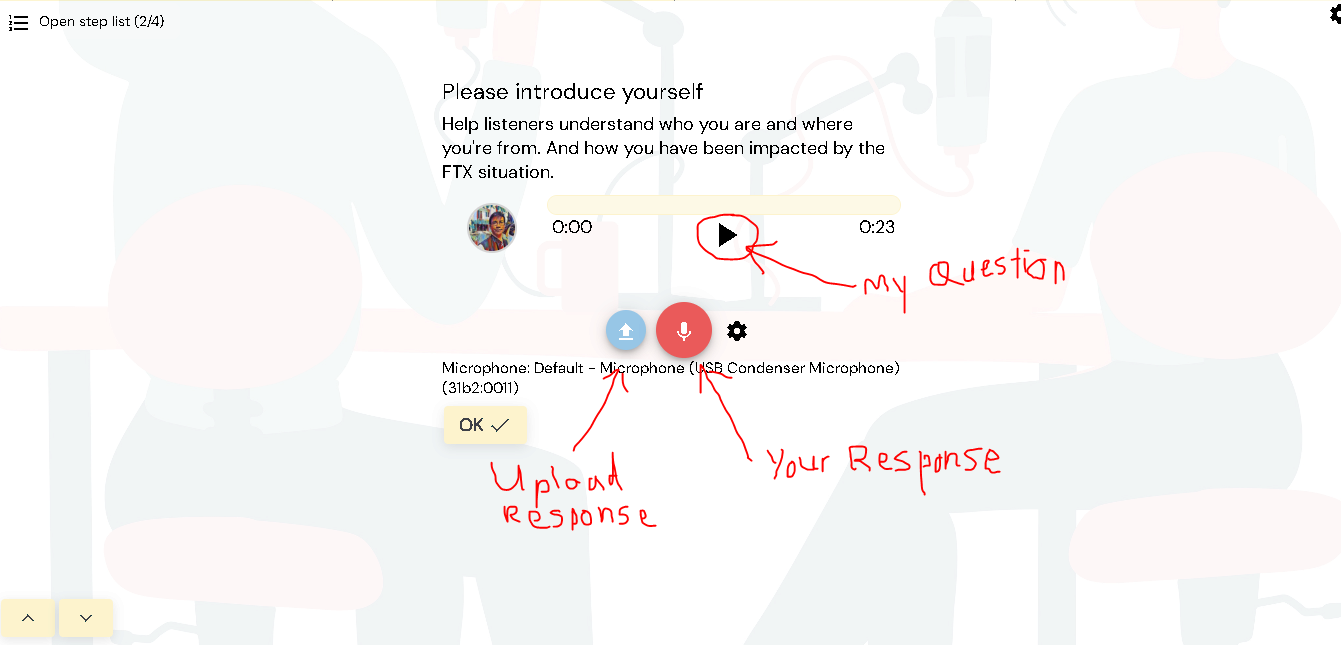
Please check out our FTX interview page at Rumble Studio, it will allow you to record your audio responses to the FTX situation. We plan to compile the audio responses into a podcast (or two) and share them here in this website.
Here is how you use the app.
Please follow the instructions below.
Thank you for those who are participating, we need your audio responses while we continue to research and write this piece.
